
From 6th April 2026:
Above inflation increases of the UC Standard Allowances
From 6th April most benefit rates increased by 3.8%, but the monthly Standard Allowances of UC have risen by slightly over 6% to
£338.58 for a single person aged under 25
£424.90 for a single person aged 25+
£666.97 for most couples
However:
- the Benefit Cap might reduce or wipe-out these increases, and,
- anyone who gets a Transitional Element (because their basic Universal Credit amount is less than they got from their legacy benefits) will not gain from this increase, since an equal amount will be eroded off their transitional amount.
The removal of the Two Child Limit in Universal Credit
Between April 2017 and April 2026 the Two Child Limit restricted the number of Child Elements that could be allowed in Universal Credit awards.
From 6th April 2026 this limit has been removed; but many families will find that they still get a restricted amount of Universal Credit because of the Benefit Cap.
For Example:
Anna has three children and lives in a privately rented property in Nottingham.
Before April 2026 she got Child Benefit and Universal Credit including two Child Elements and a Housing Costs Element. Her full awards came to £1,998.14 per month; but the Benefit Cap restricted her payments to £1,835 per month.
From April 2026 her Universal Credit will include three Child Elements. With the the annual cost-of-living increases her full UC and CB awards will come to £2,355.08 per month, but the Benefit Cap still restricts her payments to £1,835 per month
Also, anyone who gets a Transitional Element (because their basic Universal Credit amount is less than they got from their legacy benefits) will have the extra Child Elements deducted from their transitional amount
New reduced rate LCWRA Element
The LCWRA element is an extra amount for people who have illnesses or disabilities that have severe effects.
Before April 2026 this was £423.27 per month.
From April 2026 this is reduced to £217.26 unless:
- you already entitled to an LCWRA element on 6 April 2026; or
- you meet the severe conditions criteria – which means your condition is lifelong, constant, and has been diagnosed by a qualified NHS health care professional, or,
- you are terminally ill – your death would not be a surprise in the next twelve months.
These two rates of the LCWRA Element are now frozen until March 2030.
LCW Elements for people who have been claiming continuously from before 2017 are also frozen at £158.76
The Household Support Fund and Discretionary Housing Payments have been replaced by a new Crisis and Resilience Fund.
This should offer:
- Crisis Payment: Providing support to those in crisis
- Housing Payment: Providing financial support towards housing needs, to those who face a shortfall in meeting their housing costs
- Resilience Services: Funding for services delivered by Authorities or external providers to improve financial resilience
- Community Coordination: Investment in activities that connect and enhance the local support landscape
Government guidance on how this should operate can be found here
State Pension hits £1,000 per month
New State Pension for people who got to pension age after 6 April 2016 increases to £241.30 per week; which equals £1,045.63 per month.
Pension Age has begun to rise again
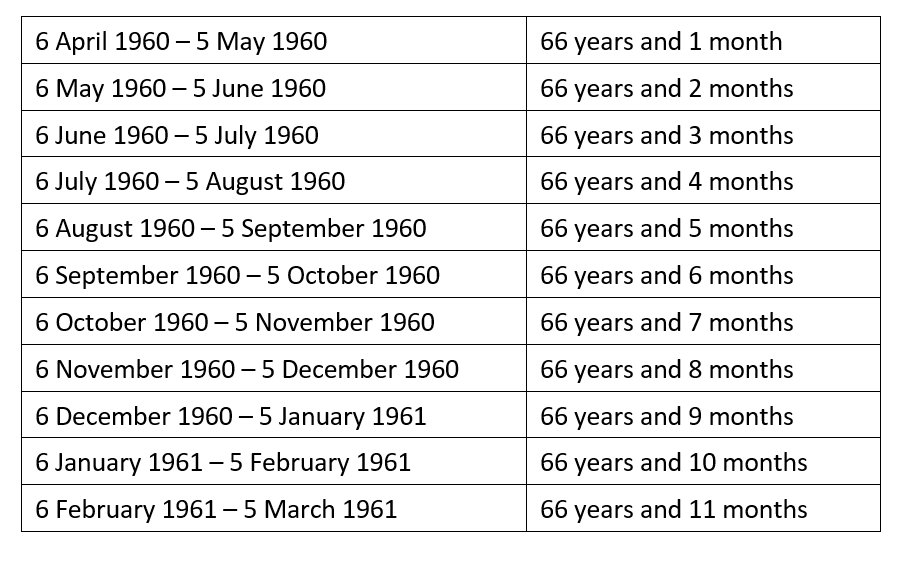
After a few years where Pension Ag has been 66 years it has begun to rise again.
If you were born between 6th April 1960 and 5th March 1961, you reach pension age at some time between your 66th birthday and the age of 66 years and 11 months.
If you were born between 6th March 1961 and 5th April 1977, you reach Pension Age on your 67th birthday. This will apply from 6th March 2028.
If you were born between 6th April 1977 and 5th April 1978, you reach pension age at some point between your 67th birthday and 67 years and 11 months. This will apply from 6 May 2044
If you were born after 6th April 1978, you reach Pension Age on your 68th birthday. This will apply from 6th April 2046.